
We get asked this question regularly: “Is this actually silver, and what’s it worth?”
It’s a understandable question. Maybe you’ve inherited a teapot from your grandmother, picked up a set of spoons at a car boot sale, or found a dusty old box in the loft. Before you decide whether it’s worth restoring, melting down, or just keeping on the shelf as a nice-looking ornament, it helps to know what you’re actually holding. Here’s how to find out — no jeweller’s loupe required (small high powered magnifying glass).
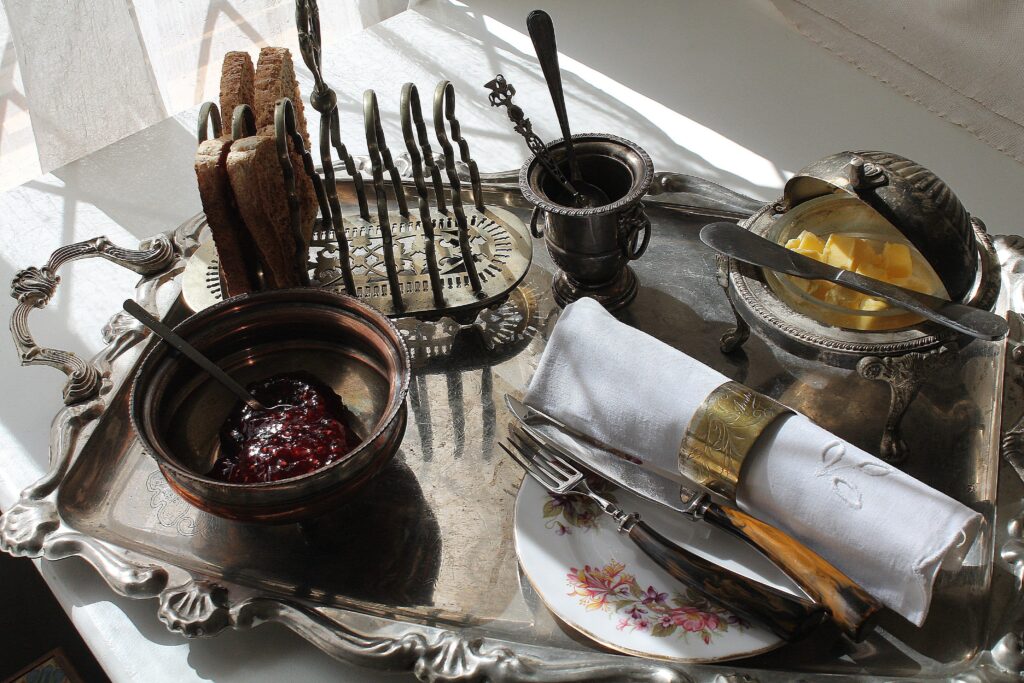
1. Start With the Hallmark
If your piece is genuine British sterling silver, it should carry a hallmark, a small cluster of stamped symbols, usually on the base, rim, or underside of the handle. This is the single most reliable clue you’ll find, so it’s always the first place to look.
A full UK hallmark typically includes:
- The sponsor’s mark – initials identifying the maker or company
- The fineness mark – usually a lion passant (a walking lion) for sterling silver, or the numbers ‘925’
- The assay office mark – a symbol showing where the piece was tested and marked (a leopard’s head for London, an anchor for Birmingham, a rose for Sheffield, a castle for Edinburgh)
- A date letter – a single letter in a particular typeface and shield shape, which tells you the exact year it was hallmarked
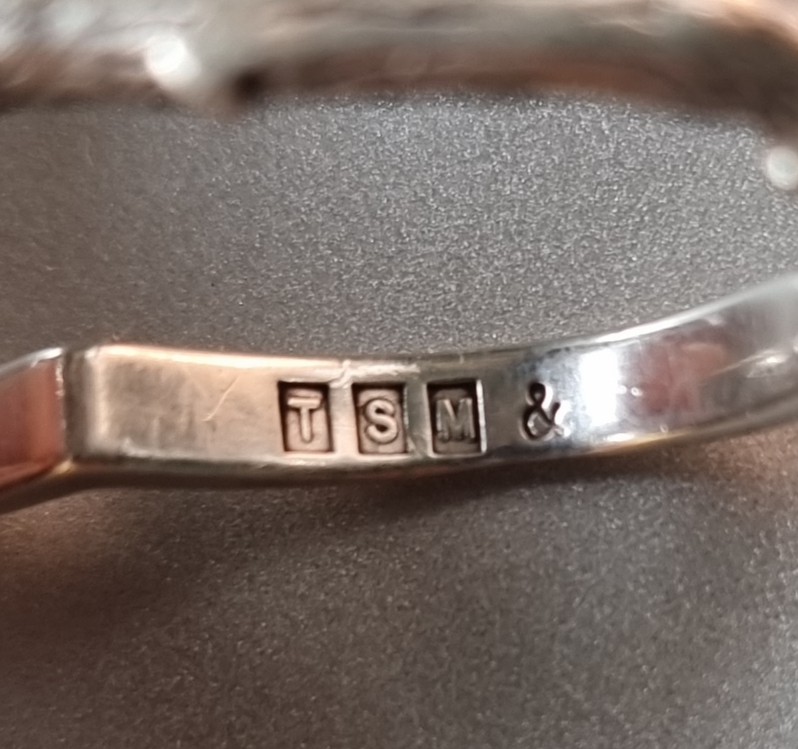
TSM – indicates this is made by Tony, all Bespoke Silver and Gold Ltd work carries this mark.
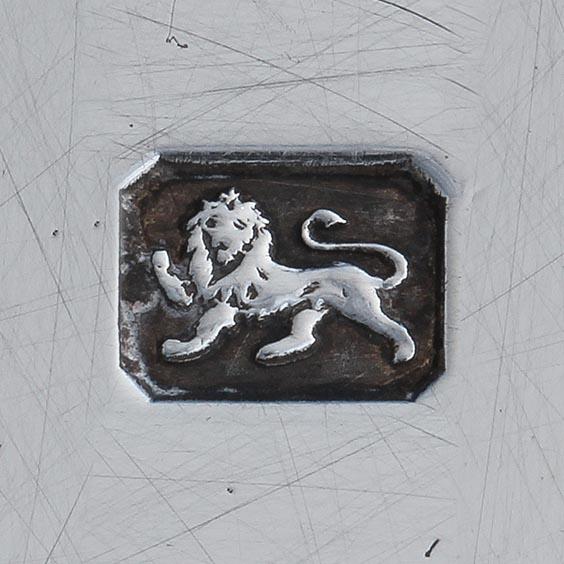
The walking lion mark is the stamp of fineness showing that this piece is made from sterling silver. You may also see a 925 stamp here in it’s place.
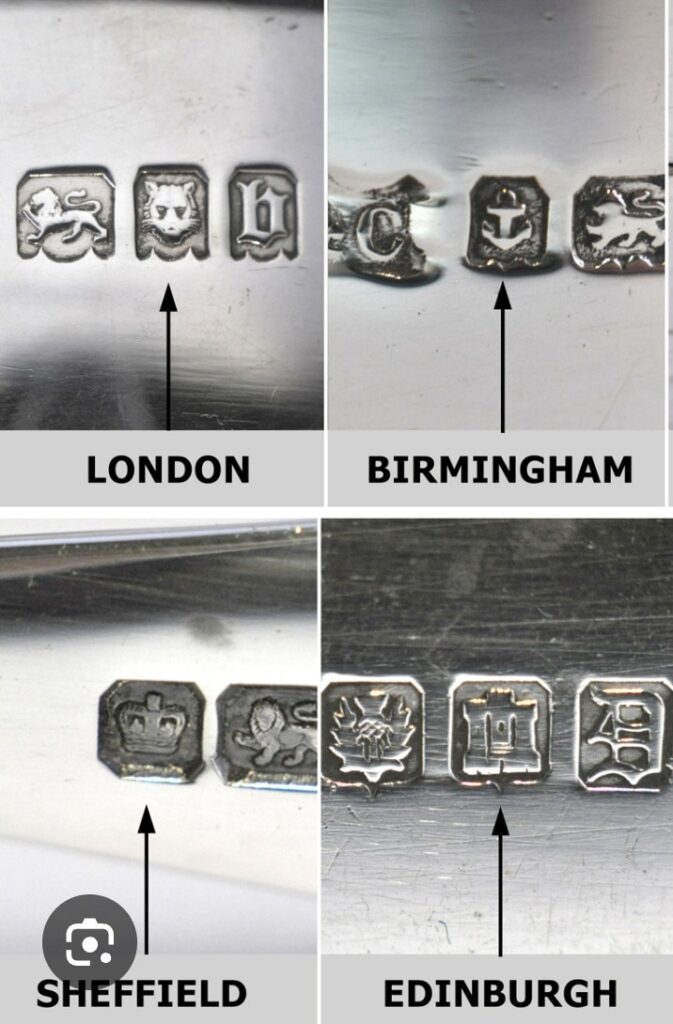
The above four images show where the sterling silver was verified as silver and stamped by that particular assay office.
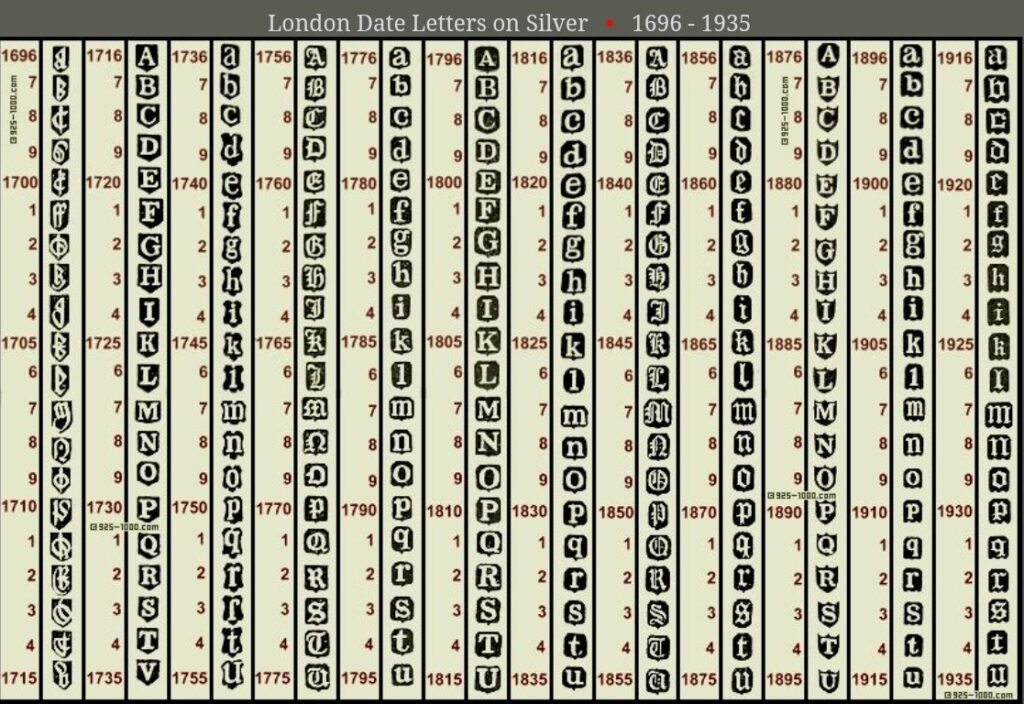
This image shows the letter symbol which should also appear in the hallmarked area of the piece that will enable you to date this particular piece.
TOP TIP: the marks are usualy tiny. Using your phone camera zoomed right in will help you see the detail clearly. No hallmark doesn’t automatically mean it’s not silver — older or foreign pieces, or items below a certain weight, aren’t always marked — but a genuine hallmark is the strongest proof you’ll get without testing.
2. Do the “Hold and Tap” Test
This is the one that surprises people the most, but it really works. Solid silver has a distinctive quality when you tap it gently — a clear, ringing, almost musical note that lingers for a moment. Base metal, silver plate, or nickel alloy tends to sound flatter and duller, more of a ‘clunk’ than a ‘ring’.
Try this yourself:
1. Hold the piece loosely between your fingertips (not resting on a table — this will dampen the sound)
2. Give it a gentle tap with your fingernail or a small metal object
3. Listen for the tone — solid silver should ring clearly and hold the note briefly
It’s not a scientific test on its own, but combined with the hallmark check, it’s a great second opinion.
3. Try the Magnet Test
Here’s a quick and easy elimination test: silver is not magnetic. If a magnet sticks firmly to your item, it’s not solid silver — you’re likely to be looking at a piece with a steel or iron base, plated in silver on top.
That said, some plated items use non-magnetic base metals like brass or copper, so a magnet not sticking doesn’t guarantee it’s silver but it’s a good way to rule pieces out.
4. Watch Out for EPNS
If you spot the letters ‘EPNS’ stamped somewhere on your piece, that stands for Electroplated Nickel Silver — a base metal (usually a nickel alloy) with a thin layer of silver plated over the top. It’s a very common find, especially in Victorian and Edwardian tableware, and while it can still be beautiful and perfectly usable, it isn’t solid silver and won’t carry anything like the same value.
Other marks to watch for include ‘EPBM’ (Electroplated Britannia Metal) or simply ‘PLATE’ — all signs you’re dealing with a plated piece rather than solid silver.
5. Consider the Weight and Feel
This one takes a bit of experience to trust, but solid silver tends to have a particular weight and density to it — pieces often feel heavier than you’d expect for their size compared to plated alternatives. It’s not a definitive test on its own, but if a piece feels surprisingly light for something claiming to be solid silver, be wary.
So – Repair, Recycle, or Keep as It Is?
Once you know what you’re actually working with, the decision gets a lot easier:
‘Genuine hallmarked silver’ in poor condition is almost always worth repairing. Dents, splits, and worn engraving can usually be restored beautifully, and the piece will hold both sentimental and material value. Perhaps an heirloom piece to gift to one of your younger generation.
‘Silver plate’ (EPNS or EPBM) can often still be repaired and refreshed if it means something to you, even though it won’t have the same resale value as solid silver.
‘Badly worn plate with no sentimental value’ may be better recycled or repurposed, depending on the base metal underneath.
Every piece has its own story, and sometimes the only way to be certain is to bring it in and let an experienced eye — and a proper set of tools — take a closer look.
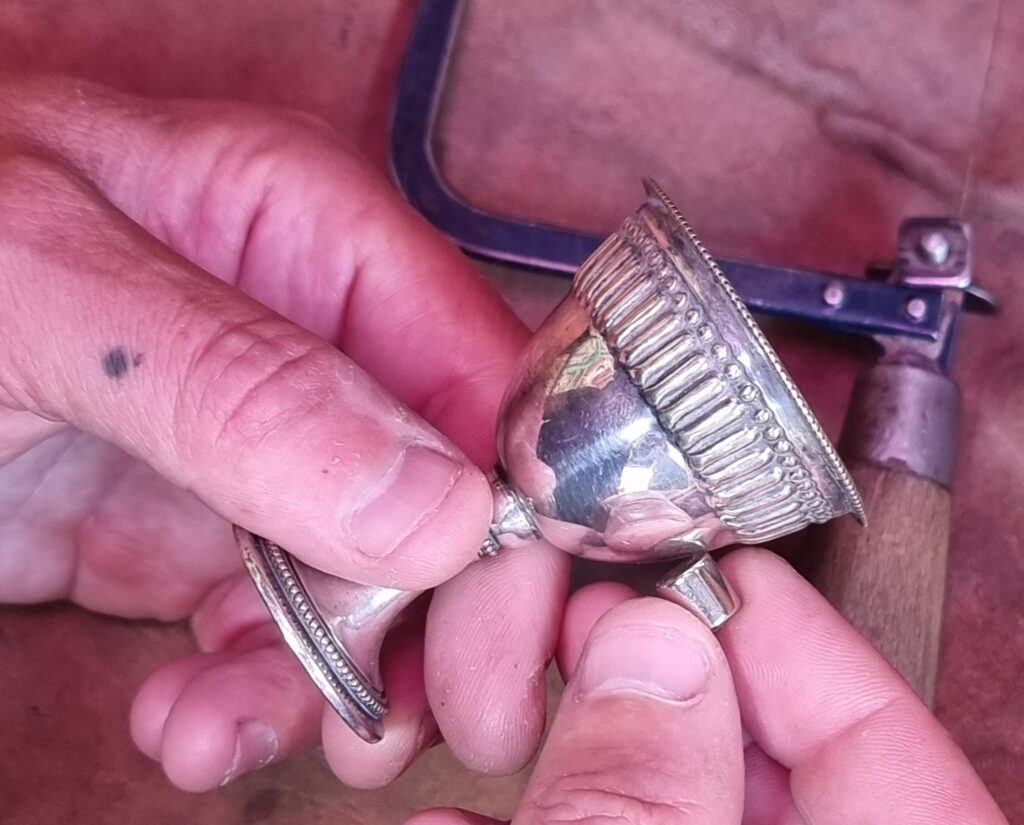
PHOTO: Tony examining a piece of silverware in the workshop
‘Not sure what you’ve got?’ Drop us a whatsapp with images, and the story behind the piece, and Tony can give you some advice. If then he thinks it’s worth you popping in, you can bring your piece into the workshop, and we’ll happily let you know what you’re really holding — and whether it’s worth restoring to its former glory. To give you an idea of what it might be worth then this would definitely need a visit to the workshop, after you’ve done all the above checks. We hope this helps.
Bespoke Silver & Gold Ltd — Traditional Trade Silversmith, since 1990, now based in West Cornwall.